Infineon is testing Soluboard, a biodegradable PCB substrate that dissolves in warm water, leaving compostable material and making components easier to recycle.
 Onlitex Engineering Team1 min read
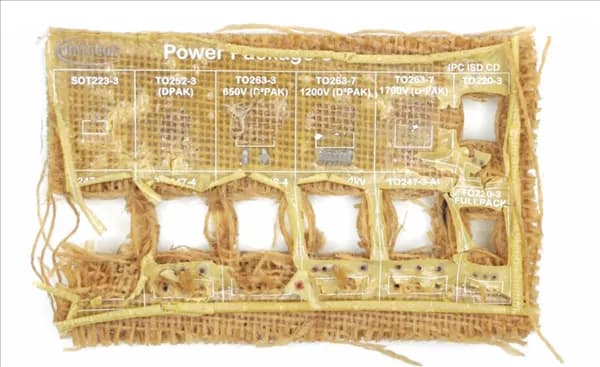
Infineon recently announced that it is testing a biodegradable PCB substrate called Soluboard, made from natural fibers and a halogen-free polymer.
How Soluboard dissolves
When Soluboard material is immersed in warm water, the polymer begins to dissolve and the composite layers separate, leaving compostable organic material behind. The water left after the polymer dissolves can be safely treated like ordinary wastewater without causing additional environmental pollution.
As well as the board being biodegradable, about 90% of the components attached to it can be recycled.
Developed by Jiva Materials
Soluboard was developed by the British startup Jiva Materials. Co-founder Jonathan Swanston said that this water-based recycling process for PCBs can improve the recovery rate of precious metals.
Jiva Materials also stated that replacing FR-4 PCB material with Soluboard would save 10.5 kg of carbon and 620 g of plastic per square meter of PCB.
Infineon has so far produced three different types of PCB demonstration boards based on Soluboard substrates, and it plans to gradually expand its product range in the future.
- #biodegradable PCB
- #Infineon
- #sustainability
- #PCB materials