AI servers need more layers, faster materials and higher-value boards. Here is why the AI era is driving both PCB volumes and prices up, with China at the center.
 Onlitex Engineering Team4 min read

From a functional perspective, the PCB acts as a bridge between electronic components. In servers in particular, it serves as the base for the server chips, carries data transmission and connects the various components, ensuring safe and stable electrical connections and insulation between them. As the base for the server's chip modules, it is widely used in motherboards, backplanes and network cards, and it is undoubtedly a key component for the stable operation of the server.
AI raises the bar for PCB technology
The arrival of the artificial intelligence era has further expanded the applications of PCBs. In the server field, PCBs are trending towards high speed and high frequency, miniaturization, portability and multifunctionality. For the computer and server industries, the high-speed, high-frequency 5G era and the wave of AI technology have raised the requirements and standards for PCBs.
Higher communication frequencies and transmission rates require more computing power, and PCBs must ensure high-speed, stable operation, which means meeting technical requirements for a low dielectric constant, a low dissipation factor and low copper roughness. As a result, the process requirements for PCBs in AI servers are much higher than for traditional PCBs, and large, high-layer-count, high-order HDI boards and high-frequency, high-speed PCBs will gradually become mainstream.
More layers for AI servers
To manage ever-increasing amounts of data, AI models need more computing power, and this shows in PCB layer counts. Mainstream server and memory packaging substrates currently have 6 to 16 layers. As artificial intelligence enters large-scale commercial use, high-end servers with 16 or more layers will become mainstream.
As technical demands keep rising, PCB layer counts will continue to increase, and the supply of backplanes with more than 20 layers will gradually grow. For AI training in particular, server PCBs will generally have more than 20 layers.
China: the world's PCB manufacturing center
Developed regions such as Europe, the United States and Japan started early in the PCB industry and built mature industries with clear competitive advantages. Before the 21st century, the United States, Japan and Europe accounted for over 70% of global PCB output value.
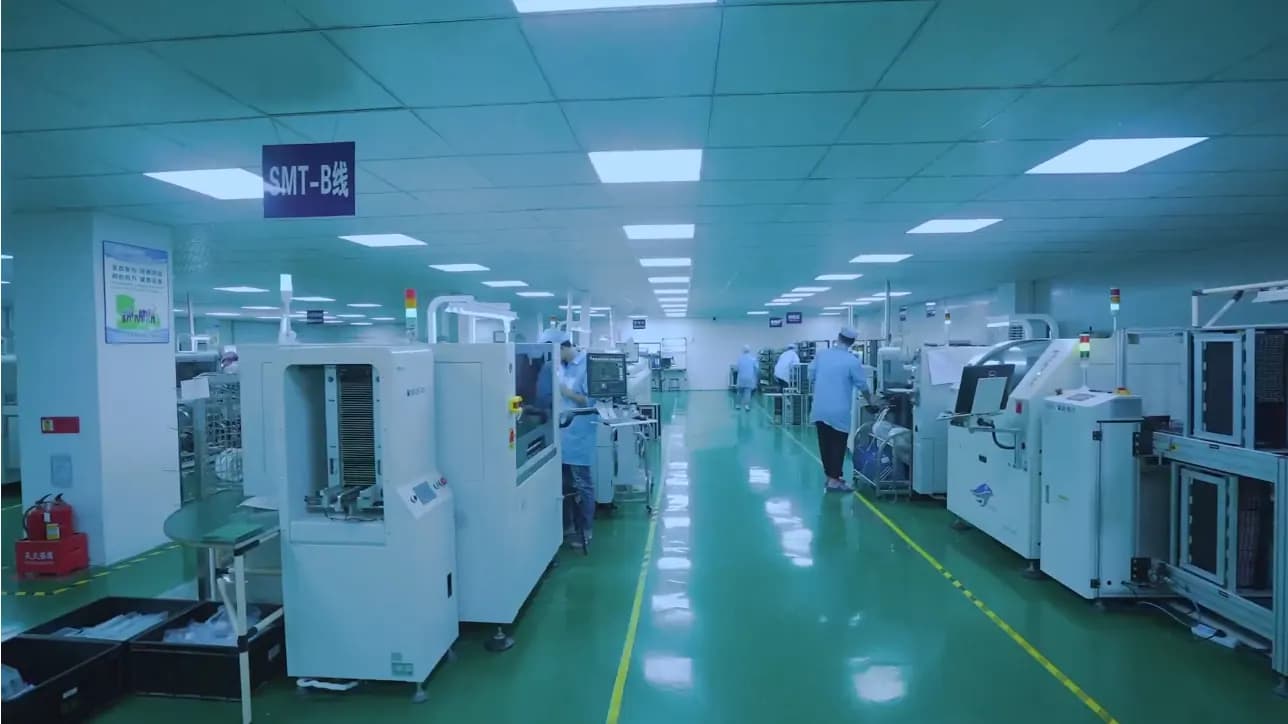
Since 2000, the PCB industry in Asia, and especially in China, has risen rapidly. With its combined advantages in resources, policy and industrial clusters, China has developed its PCB industry fully, and as the global industrial center shifted to Asia, China became the world's PCB manufacturing center. Since 2006, China has been the world's largest PCB production base, ahead of Japan. In 2022, the total output value of China's PCB industry reached USD 44.2 billion, 54.1% of the global total.
In recent years, as more companies have increased their investment in R&D and production, the cluster advantage of China's PCB industry has become more obvious, and many PCB manufacturers have built their own competitive advantages and bargaining power in different segments.
AI chips drive both volume and price
The rapid development of cutting-edge technologies such as AI, and the deepening use of artificial intelligence in industry, are sparking an industrial revolution worldwide. As demand for computing power keeps growing, high-performance computing chips have become a market necessity. China's AI chip market is expected to reach 178 billion yuan by 2025, a compound annual growth rate of 42.9% from 2019 to 2025. This huge incremental market will drive many industries forward together, and the PCB industry stands to be the biggest beneficiary.
Technically, AI servers have higher requirements for chip performance and transmission rates, and server platform upgrades naturally raise the requirements for PCB layer counts and materials. In future, high-frequency, very-low-loss and ultra-low-loss materials will become the main board materials, laying the groundwork for PCB volume and price to rise together. Market research shows that a PCB for the Purley platform, which supports the PCIe 3.0 standard, is worth about 2,200 to 2,400 yuan, while the PCB value of an AI server can be as high as 10,000 to 15,000 yuan.
Policy support and long-term outlook
Driven by market expansion, more Chinese companies are accelerating their entry into the PCB industry. In 2021, Chinese companies accounted for more than 60% of the world's top 100 PCB manufacturers.
As China's share of PCB output value keeps growing, government support is also increasing, because the PCB industry is part of the electronic information industry, which has long been a strategic, fundamental and leading pillar of China's development. Alongside a series of favorable policies, new infrastructure such as 5G, the Internet of Things and the Industrial Internet is developing in full swing, bringing new momentum to PCB companies.
In the long run, China's leading position in the global PCB market looks very stable. Industry assessments expect China's PCB industry to grow at a compound annual rate of 4.3% over the next five years, with total output value reaching USD 54.605 billion by 2026.
- #PCB industry
- #AI servers
- #high-speed PCB
- #China PCB