How PCBs replaced point-to-point wiring, why flexible PCBs are in demand, and the main types of FPC: single-layer, double-sided and multilayer.
 Onlitex Engineering Team3 min read

From point-to-point wiring to PCBs
Before PCBs appeared, circuits were built with point-to-point wiring. This method was very unreliable: as a circuit aged, broken wires could cause open circuits or short circuits at the circuit nodes. Wire wrapping was a significant advance in circuit technology. It improved the durability and replaceability of circuits by wrapping small-diameter wire around posts at each connection point.
As the electronics industry moved from vacuum tubes and relays to silicon semiconductors and integrated circuits, the size and price of electronic components fell. Electronic products appeared more and more in the consumer market, prompting manufacturers to look for smaller and more cost-effective solutions. And so the PCB was born.
Growing demand for flexible PCBs
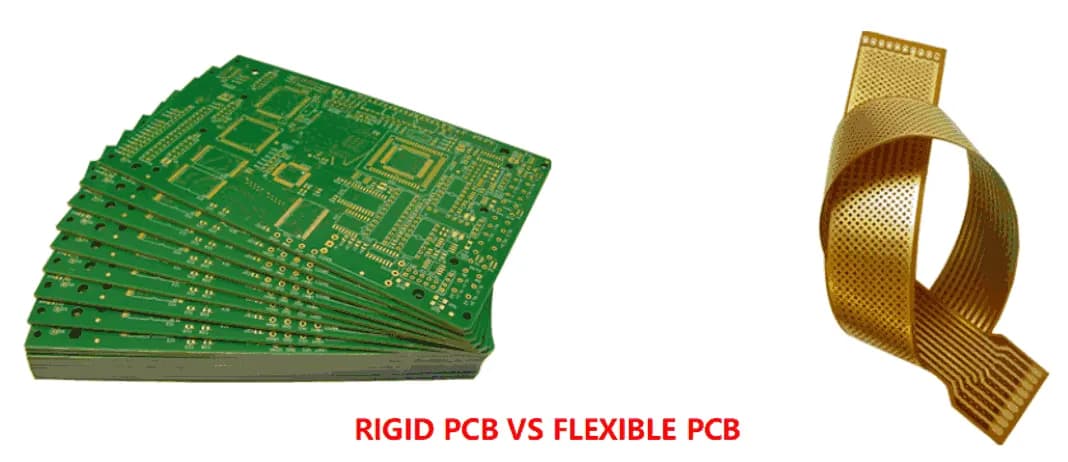
All electronic products use PCBs, and the PCB market trend is almost a barometer of the electronics industry. With the development of high-end, miniaturized electronic products such as mobile phones, laptops and PDAs, demand for flexible PCBs (FPCs) keeps increasing, and PCB manufacturers are accelerating the development of thinner, lighter and denser FPCs.
1. Single-layer FPC
A single-layer FPC has one layer of chemically etched conductive pattern, and the conductive layer on the surface of the flexible insulating substrate is rolled copper foil. The insulating substrate can be polyimide, polyethylene terephthalate (PET), aramid fiber ester or polyvinyl chloride. Single-layer FPCs can be further divided into four subcategories:
Single-sided connection without a cover layer
The conductor pattern is on an insulating substrate, with no cover layer on the conductors. Interconnection is made by soldering, fusion welding or pressure welding. This type was commonly used in early telephones.
Single-sided connection with a cover layer
Compared with the previous type, this one simply adds a cover layer over the conductors. The pads must be left exposed when the cover is applied, which can easily be done by leaving the end areas uncovered. It is the most widely used type of single-sided flexible PCB, found in automotive instruments and electronic instruments.
Double-sided connection without a cover layer
The connection pads can be accessed from both the front and back of the conductors. An access hole is opened in the insulating substrate at each pad, made by punching, etching or another mechanical method at the required position.
Double-sided connection with a cover layer
This type differs from the previous one in having a cover layer on the surface. The cover layer has access holes that allow both sides to be terminated while still keeping the cover layer. It is made of two layers of insulating material and one layer of metal conductor.
2. Double-sided FPC
A double-sided FPC has a conductive pattern etched on both sides of the insulating substrate film, which increases the wiring density per unit area. Metallized holes connect the patterns on both sides of the insulating material to form conductive paths that meet the design and functional requirements of flexibility. The cover film protects single- and double-sided conductors and indicates where components are placed. Metallized holes and cover layers are optional, depending on requirements, and this type of FPC is rarely used.
3. Multilayer FPC
A multilayer FPC is made by laminating three or more layers of single- or double-sided flexible circuits together, then drilling and plating metallized holes to form conductive paths between the layers. This removes the need for complex soldering processes. Multilayer circuits offer significant functional benefits: higher reliability, better thermal conductivity and more convenient assembly.
The advantage is that the substrate film is lightweight and has excellent electrical properties, such as a low dielectric constant. A multilayer flexible PCB made with polyimide film as the substrate is about one-third lighter than a rigid epoxy glass cloth multilayer PCB, but it loses the excellent flexibility of single- and double-sided flexible PCBs; most of these products do not require flexibility. Multilayer FPCs can be further divided into the following types:
Flexible finished products on a flexible insulating substrate
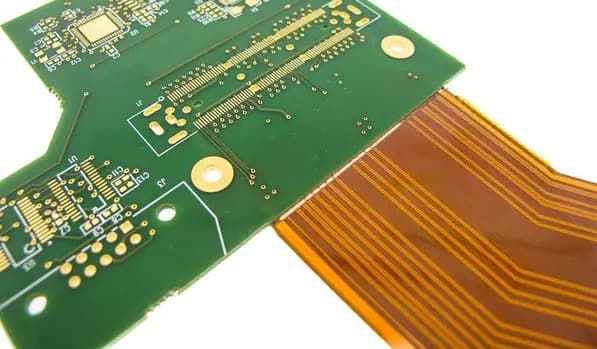
This type is made on a flexible insulating substrate, and the finished product is specified to be flexible. The structure usually bonds the two ends of many single- or double-sided microstrip flexible PCBs together while leaving the central part unbonded, which gives high flexibility. For a high degree of flexibility, a thin, suitable coating such as polyimide can be used on the conductor layer instead of a thicker laminated cover layer.
Non-flexible finished products on a soft insulating substrate
This type is made on a soft insulating substrate, but the finished product is not specified to be flexible. It is made by laminating soft insulating materials, such as polyimide film, into a multilayer board, which loses its inherent flexibility after lamination.
- #flexible PCB
- #FPC
- #PCB types