What a rigid-flex PCB is, where rigid-flex boards are used, what makes them harder to design and build, and the benefits they bring to assembly and testing.
 Onlitex Engineering Team3 min read
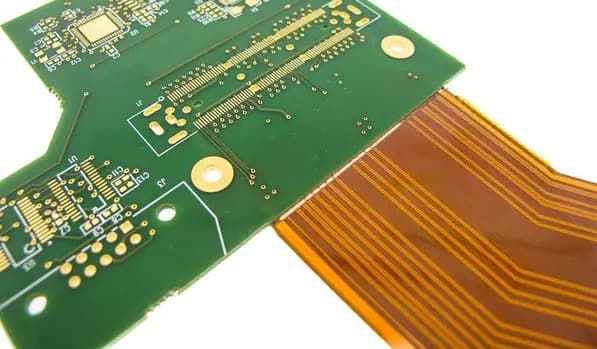
A rigid-flex PCB combines flexible and rigid board technologies in one application. Most rigid-flex boards consist of multilayer flexible circuits that are connected externally and/or internally to one or more rigid boards, depending on the design of the application. The flexible substrate is designed to be constantly flexed, usually forming a bend during manufacturing or installation.
Rigid-flex design is more challenging than designing a typical rigid board, because these boards are designed in three-dimensional space, which also gives them greater space efficiency. Because rigid-flex substrates can be designed in 3D, designers can twist, fold and roll the flexible sections to achieve the shape needed to fit the final product's packaging.
Applications of rigid-flex PCBs
Rigid-flex PCBs have a wide range of applications, from military weapons and aerospace systems to mobile phones and digital cameras. Rigid-flex boards are increasingly used in medical devices such as pacemakers because they reduce space and weight. The same advantages also apply to military weapons and weapon control systems.
In consumer products, rigid-flex construction not only makes the most of space and weight, but also greatly improves reliability by eliminating many solder joints and fragile wiring. These are just a few examples: rigid-flex PCBs can be used in almost all advanced electrical applications, including test equipment, tools and automobiles.
Rigid-flex PCB technology and production
Whether for a rigid-flex prototype or a large rigid-flex PCB manufacturing and assembly batch, the technology is fully proven and reliable. Flexible PCBs are particularly good at overcoming space and weight problems because of their spatial freedom.
At an early stage of rigid-flex PCB design, careful consideration of flex solutions and a proper evaluation of the available options will bring significant benefits. Rigid-flex PCB manufacturers must be involved early in the design process to make sure design and manufacturing are coordinated and that any changes to the final product are taken into account.
Rigid-flex manufacturing is more complex and time-consuming than rigid board manufacturing. Compared with a rigid FR-4 board, all the flexible parts of a rigid-flex assembly use completely different handling, etching and soldering processes.
Benefits of rigid-flex PCBs
Rigid-flex PCBs offer the best of both worlds. They can be adapted to a wide range of applications and have several benefits over purely rigid or purely flexible boards. Some unique benefits of rigid-flex circuit boards include:
Design consolidation
With rigid PCBs, you typically need multiple cable assemblies and designs to complete production. Rigid-flex boards, on the other hand, need only one design. You can combine different PCBs into the same assembly and end up using fewer materials, which makes rigid-flex PCBs cheaper to manufacture than rigid boards.
Fewer parts and less space
Rigid-flex PCBs use thin, flexible polyimide films, so they take up less space. You can reduce the size of the final product and use fewer materials, which saves further cost. Because you need fewer parts (cables and connectors), rigid-flex PCBs are cost-effective, especially in mass production. Ordering fewer parts also reduces supply chain risk.
Simplified assembly
Using a rigid-flex PCB simplifies the assembly process: you only need one simplified PCB assembly, not two or three designs. There is also less room for error, because most rigid-flex PCBs can only be installed one way. Fewer errors mean fewer problems and lower costs.
Lower testing costs
Because a rigid-flex PCB is a single assembly, it only needs one test operation instead of several. This can greatly reduce testing costs, whereas rigid PCBs may need three or more tests, depending on the number of boards. More importantly, rigid-flex boards make it possible to test the complete assembly before installation, which saves a lot of time and effort.
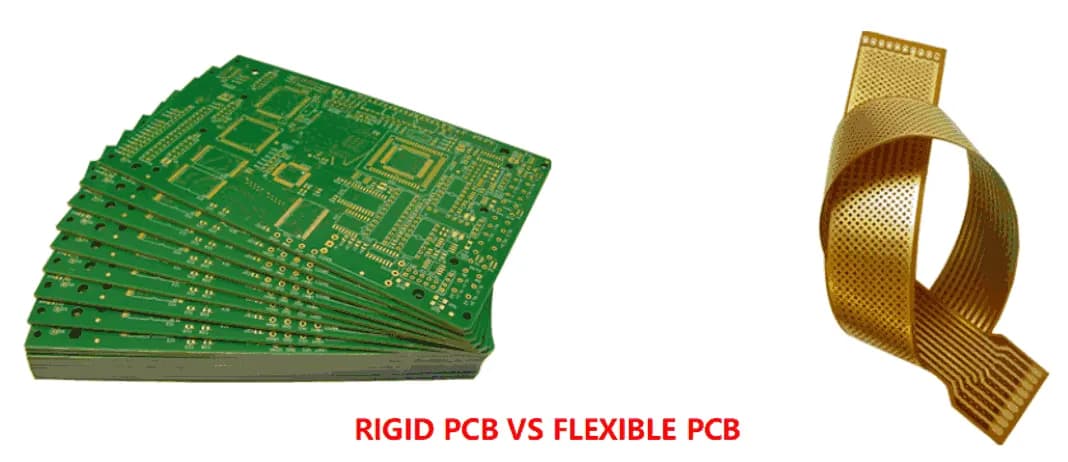
Compare rigid and flexible boards in our guide to rigid PCB vs flexible PCB.
- #rigid-flex PCB
- #flexible PCB
- #PCB design