No MOQ doesn't always mean no minimum. What low-volume PCB assembly in China really involves: hidden part minimums, real lead times and small-batch cost.
 Onlitex Engineering Team5 min read
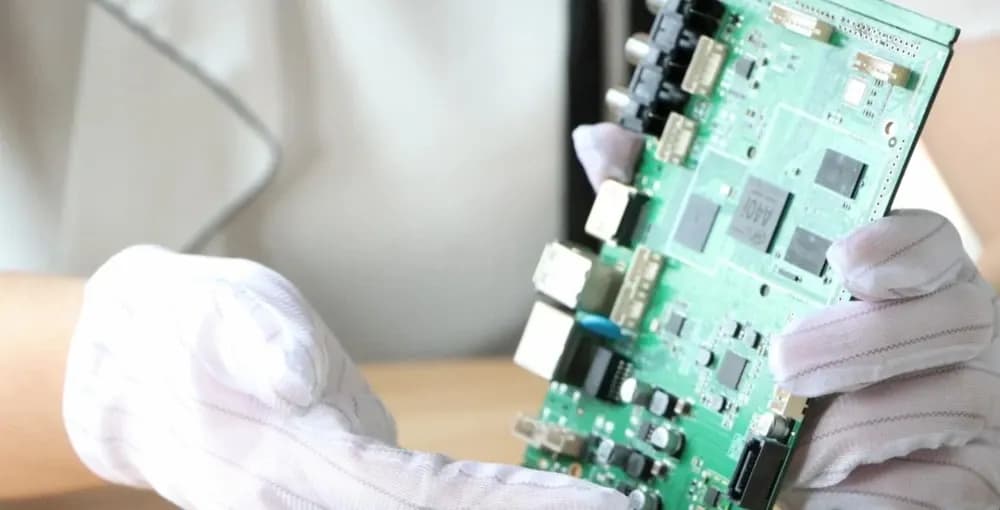
Low-volume PCB assembly in China means having a manufacturer build anything from a few prototype boards to a few thousand units, usually with no minimum order for the boards themselves. The real limits come from elsewhere: component packaging, setup costs and part availability decide how small, fast and cheap a batch can be.
This guide answers the questions buyers ask most before placing a small order: whether there is really no MOQ, how long it takes, why small batches cost more per board, and how to get from prototype to production without surprises.
What Counts as Low Volume?
There is no official cut-off, but most suppliers use three rough stages.
| Stage | Typical purpose | What matters most |
|---|---|---|
| Prototype | Proving the design works | Speed, engineering feedback |
| Low volume / pilot run | Field trials, certification, first customers | Repeatable quality, cost per board |
| Volume production | Ongoing supply | Price, capacity, supply-chain stability |
Low volume sits in the middle. It is where many hardware companies, industrial equipment makers and OEMs with niche products spend most of their time, which is why choosing a partner that handles small batches well matters.
No MOQ Does Not Always Mean No Minimum
The factory may accept one board, but your parts may not come in ones.
Many Chinese assemblers, including Onlitex, set no minimum order quantity for assembled boards. The hidden minimums are usually on the component side:
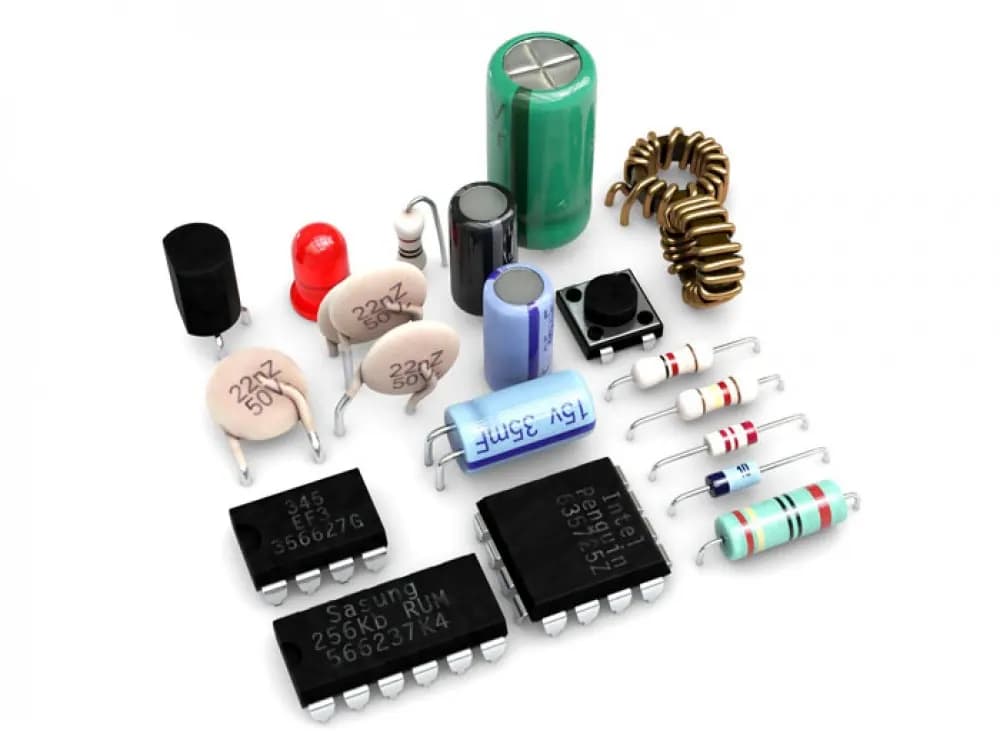
- Reels and minimum packs. Some parts are only sold in full reels or minimum package quantities. For a ten-board build, you may pay for far more parts than you use.
- Cut tape versus reels. Small quantities often come on cut tape. Ask whether your assembler can run cut tape on its machines, or whether it needs leader tape added.
- Attrition. Pick-and-place machines lose a small number of very small parts during setup. A small build still needs a few spares per line.
- Bare PCB panels. Board fabrication has its own setup cost, so a few extra boards often cost very little.
How to handle it: ask the assembler to show leftover parts on the quote, and decide whether to keep them as stock for the next build. For expensive parts you already hold, consider supplying them yourself. See turnkey vs consigned PCB assembly.
How Long Does It Really Take?
Assembly is fast; component sourcing usually decides the date.
A small batch moves through five steps:
- Quote and engineering review: your files and BOM are checked for issues. At Onlitex this usually takes 24–48 hours, or 2–3 working days for BOMs with more than 100 component types.
- Component sourcing: usually the longest step, and the one that varies most.
- Bare PCB fabrication: runs in parallel with sourcing.
- Assembly, inspection and testing: typically the shortest part for a small batch.
- Shipping: depends on the method you choose.
At Onlitex, small and medium orders usually take about two weeks when all components are in stock. Hard-to-find or long-lead parts add time, which is why an early BOM review matters.
Ask this before you compare quotes: does the lead time start at order, after engineering review, or after all parts arrive? Does it include PCB fabrication and testing? Suppliers count differently, so two quotes with the same number of days can mean very different delivery dates.
Why Small Batches Cost More per Board
The setup work is the same whether you build 10 boards or 1,000.
Before the first good board comes off the line, the factory has to:
- Make a solder paste stencil for your board
- Program the pick-and-place machines and load the feeders
- Set up inspection programs (SPI and AOI) and the reflow profile
- Build and check the first article before the run continues
In a small batch, this fixed cost is shared by fewer boards, so each board costs more. Component pricing adds to it, since small quantities rarely get volume pricing.
What helps in small batches:
- Send complete files so engineering time is not spent chasing questions. Our PCB assembly quote checklist lists exactly what to send.
- Ask for quotes at two or three quantities to see where the price breaks are.
- Reuse the same stencil and program for repeat builds: keep the design unchanged between batches where you can.
- Apply the design and BOM tips in our guide to reducing PCB assembly cost.
Quality Should Not Drop Because the Batch Is Small
A prototype that passes is only useful if production boards will pass too.
Small runs are sometimes built on a separate "prototype" process with lighter checks. That can hide problems that only appear later in volume. Look for a supplier that:
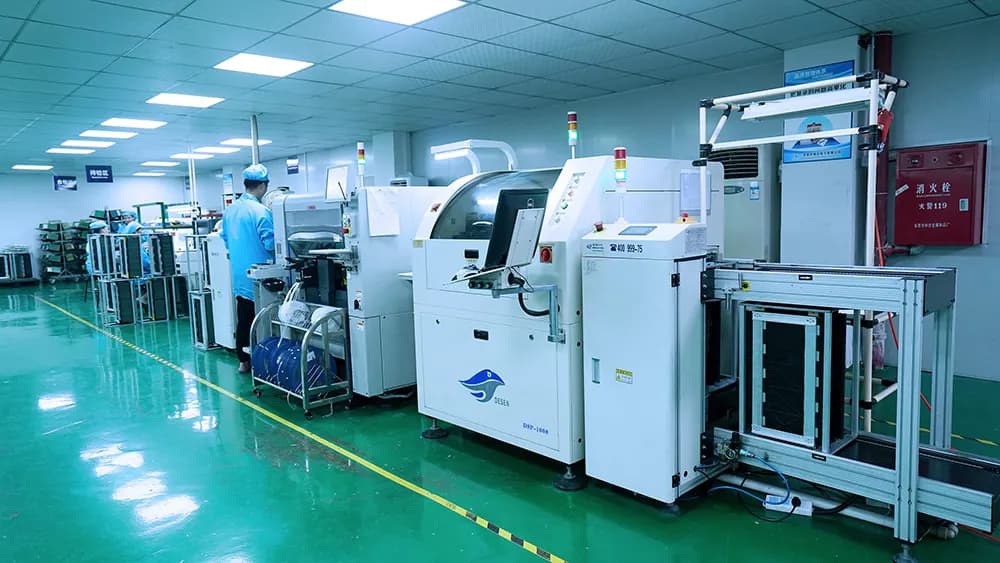
- Builds small batches on the same production lines used for volume
- Applies the same inspection: SPI, AOI and X-ray for BGA and other hidden joints
- Offers functional testing to your test plan, not just a visual check
- Works under a recognised quality system, such as ISO 9001
- Lets you inspect production, in person or online
At Onlitex, every board, prototype or production, is built and inspected to IPC-A-610 under a quality system certified to ISO 9001, ISO 13485 and IATF 16949, and you are welcome to inspect production in person or online. See our quality and equipment page for the full inspection list.
From Prototype to Production: Plan the Path Early
Choosing a partner who can scale saves you from qualifying a new supplier later.
- Prototype: prove the design, and get DFM feedback before layout is frozen.
- Pilot run: build a small batch on production processes and agree the test plan.
- Ramp-up: share a forecast so long-lead parts are bought in time.
- Volume: schedule regular builds; consider box build if you need finished products.
Moving from step 2 to step 4 with the same partner keeps the stencils, programs, test fixtures and supplier history you already paid for. If you also need enclosures, cables and final assembly, see our box build assembly service.
Checklist for Ordering a Small Batch
Use this before you request quotes.
- Gerber files, BOM with manufacturer part numbers, and placement (centroid) file ready
- Approved alternatives listed for non-critical parts
- Parts you will supply yourself clearly marked in the BOM
- Quantity options decided, such as 10, 50 and 200
- Test requirements written down, even if simple
- Lead time question asked: from when, and what it includes
- Leftover parts and stencil storage agreed for the next build
Low-Volume PCB Assembly at Onlitex
Onlitex builds prototypes, small batches and volume production in Dongguan, China, with no minimum order quantity.
- SMT, through-hole and mixed assembly on rigid, flex and rigid-flex boards: see our PCB assembly service
- Full turnkey, consignment or hybrid sourcing
- DFM review before production
- SPI, AOI, X-ray, in-circuit and functional testing
Send your Gerber files and BOM with the quantities you need. We will review your design and quote, usually within 24–48 hours.
FAQ
What counts as low-volume PCB assembly?
There is no fixed definition, but low-volume PCB assembly usually means anything from a handful of prototype boards to a few hundred or a few thousand units: more than a lab prototype, less than full mass production.
Is there a minimum order for PCB assembly in China?
Many assemblers, including Onlitex, have no minimum order quantity for boards. Check the component side too: some parts are only sold in full reels or minimum packs, which can set a practical minimum even when the factory has none.
How long does low-volume PCB assembly take?
Assembly itself is quick; component sourcing usually decides the date. At Onlitex, small and medium orders usually take about two weeks when all components are in stock. Always ask whether a quoted lead time starts at order, after engineering review or after parts arrive.
Why does a small batch cost more per board?
Setup work such as stencils, machine programming, feeder loading and first-article checks costs the same for 10 boards as for 1,000. In a small batch that fixed cost is shared by fewer boards, so the price per board is higher.
Can I go from prototypes to mass production with the same supplier?
Yes, and it is usually the safer path. Building prototypes on the same lines and with the same quality process you will use in production avoids re-qualifying a new supplier later.
- #low volume PCB assembly
- #prototype PCB assembly
- #PCB assembly China
- #MOQ