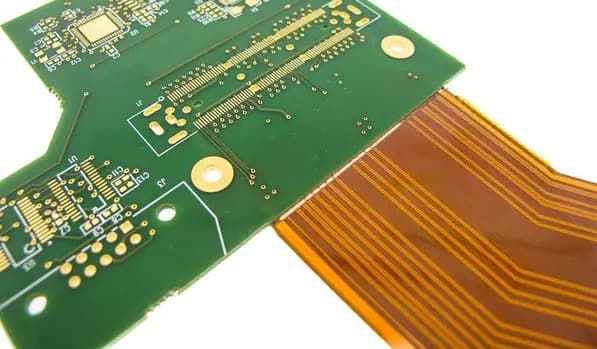
How rigid and flexible PCBs compare on flexibility, materials, thickness, shape, current capacity, space and cost, and how to choose the right board type.
 Onlitex Engineering Team3 min read
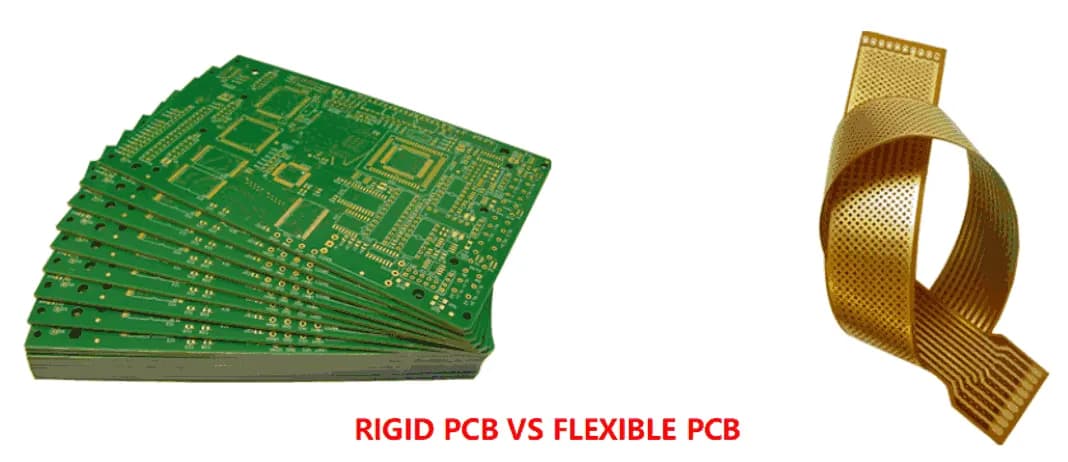
Printed circuit boards are an essential component of electronic appliances and gadgets. They are responsible for the smooth flow of electricity within an electrical circuit, and different gadgets require different types of printed circuit board. There are two major types:
- Rigid printed circuit boards (rigid PCBs)
- Flexible printed circuit boards (flexible PCBs)
Similarities and differences between rigid PCBs and flex circuits
All conventional devices can work with both types of printed circuit board. However, flexible circuit boards are ideal for complex electric circuits. Almost all new, modern electronic devices use flexible circuit boards or a combination of rigid and flexible PCBs, known as rigid-flex PCBs. Even though many electronic devices can work with either type of board, and a combination of both can be a great solution, there are still some significant similarities and differences between the two.
Flexibility
As the name implies, flexible printed circuit boards can bend and twist, but rigid circuit boards cannot. This flexibility gives a flexible circuit an advantage over a rigid printed circuit board.
Manufacturing process
The materials used to make flexible circuits are significantly different from those used to make rigid circuits. Flexible printed circuit boards are covered with flexible layers, whereas rigid printed circuit boards have solid solder masks. This also reduces the weight of a flexible printed circuit board.
Board thickness
Rigid printed circuit boards are thicker than flexible ones. Flexible printed circuit boards can be very thin, even as thin as 0.2 mm. A flexible printed circuit board has to be very thin, because some electronic devices need a bendable board.
Softness
Rigid PCBs are also called hard boards, and flexible circuit boards are called soft boards. A flexible circuit board has to be soft, because it needs to bend and twist.
Shape
Rigid boards have a standard square or rectangular shape, whereas the shape of a flexible printed circuit board can vary. The shape depends mostly on the type of electronic equipment the circuit will be used in.
Current-carrying capacity
Here, rigid printed circuit boards are superior to flexible ones. A flexible PCB may have a curved shape that does not encourage the smooth flow of current, while a rigid PCB can carry current in a straight line. This improves the current-carrying capacity of rigid printed circuit boards.
Space
When complex circuits must fit into a small device, the best choice is a flexible circuit board. Flexible printed circuit boards can be bent into any shape to fit the corresponding device. This is why most smaller devices, such as mobile phones and tablets, use flexible printed circuit boards.
Cost
There is no single way to calculate the price of a printed circuit board, because price varies with shape, size, type and design. Generally, rigid circuit boards are cheaper than flexible circuits, but this is not always the case. Flexible circuit boards often need fewer components, which reduces the material and assembly costs of the final product, so in these cases the flexible circuit is more cost-effective.
Choosing between rigid and flexible PCBs
Flexible circuit boards are certainly useful, but they are not going to replace rigid circuit boards in every application. Cost efficiency is the main obstacle to an all-flexible circuit board design in a consumer product. Rigid circuit boards are less expensive to manufacture and install in a typical automated, high-volume facility.
Typically, the ideal solution for an innovative product uses flexible circuitry where necessary, and solid, reliable rigid circuit boards wherever possible, to keep manufacturing and assembly costs down. Learn more about combining the two in our guide to rigid-flex PCBs.
Onlitex creates both flexible and rigid printed circuit boards for product manufacturers and electronic engineers. Talk to our sales team to find out whether your product prototype is best served by flexible or rigid circuit boards.
- #rigid PCB
- #flexible PCB
- #rigid-flex PCB
- #PCB types