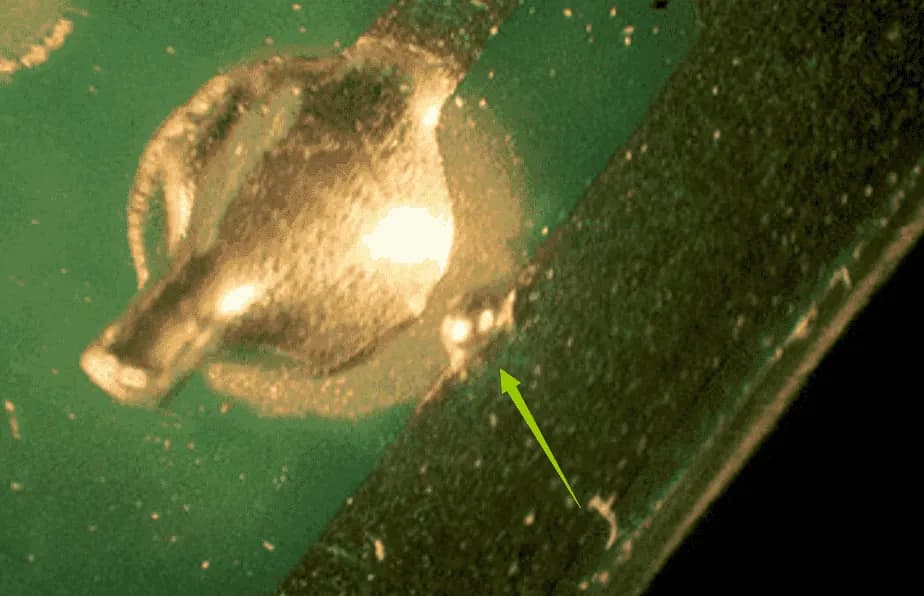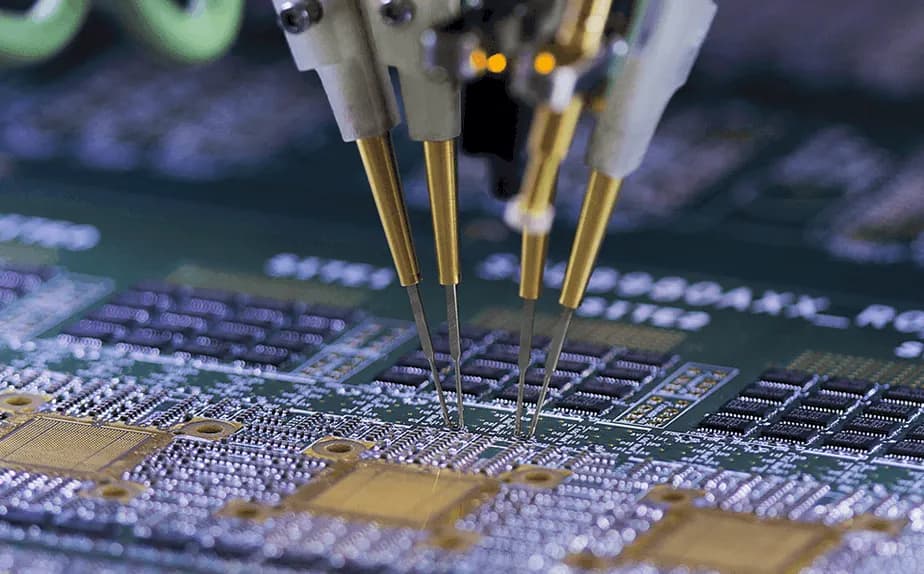
What lead-free (RoHS) soldering is, why the EU restricts lead in electronics, and the drawbacks of lead-free solder, from thermal stress to poorer wetting.
 Onlitex Engineering Team2 min read
PCBA Lead-Free (RoHS) Soldering
What is lead-free (RoHS) soldering?
A soldering process that uses a lead-free solder material is called RoHS or lead-free soldering. Besides lead (Pb), hazardous substances restricted in electronics include mercury, cadmium, hexavalent chromium, polybrominated biphenyls and polybrominated diphenyl ethers. Over time, these materials can form toxic substances that threaten human life and the environment.
To avoid the use of lead-based soldering materials, the European Union created a directive called RoHS (Restriction of Hazardous Substances), which restricts the use of lead-based solder materials in electronics.
We use more and more electronic devices every day, and all of them have components connected to a PCB with solder. Lead is a dangerous material that takes a very long time to decompose, so it is best to avoid it in our daily lives. As a result, most components are now soldered onto PCBs with lead-free RoHS solder.
Disadvantages of lead-free solder
However, lead-free solder does have some disadvantages compared with non-RoHS soldering:
- Thermal stress: Lead-free solder has a higher melting point. It melts at a higher temperature than lead-based solder, which can cause more thermal stress to the components being soldered.
- Poorer wettability: Wettability is a measure of adhesion between the solid and liquid phases. When heat is applied, lead-free solder melts and joins the component to the pad by forming a bond, but this bond is not as strong as with lead-based solder, because of the poorer adhesion between the contact pad and the component terminal.
- Defects: Because of the poorer wettability of lead-free solder joints, the chances of defects such as voids and component displacement are quite high.
- Residue formation: Lead-free solder generates surface oxides and flux contamination, which weaken the solder joint. Prolonged high temperatures during soldering also degrade the joint through oxidation.
- Grainy joints: These are caused by high temperatures and the dissolution of the metals being joined during soldering.
- Cold solder joints: These are caused by insufficient flux in the solder wire.
- De-wetting: This is caused by prolonged soldering tip contact and the dissolution of the plated metals being joined.
Conclusion
Despite these issues, RoHS solder has now become the standard, because non-RoHS solder is very harmful.
- #lead-free soldering
- #RoHS
- #solder joints
- #PCBA