Certifications, MOQ, sourcing, testing, IP protection and lead time — ten questions that help you choose the right PCB assembly partner in China.
 Onlitex Engineering Team6 min read
China remains the world's largest base for PCB assembly, and the Pearl River Delta — including Dongguan and Shenzhen — has one of the densest electronics supply chains anywhere. But suppliers vary widely in quality systems, engineering depth and communication. Choosing the right PCB assembly manufacturer in China comes down to asking the right questions, checking the answers, and proving the relationship with a small build before you scale. These ten questions, plus the audit checklist and red flags that follow, will help you separate a reliable manufacturing partner from a risky one.
Before you start: define your requirements
You will get better answers if suppliers know what you need. Prepare a short brief covering:
- Product type and end market (consumer, industrial, medical, automotive)
- Board complexity: layer count, fine-pitch or BGA parts, double-sided or mixed technology
- Volumes: prototype, pilot and expected annual quantity
- Supply model: full turnkey, partial turnkey or consigned parts
- Testing and any final assembly (box build) requirements
- Target dates and your destination market's compliance needs
1. Which certifications do you hold?
Certifications show that a supplier has documented processes and is audited against them. The most relevant ones:
| Standard | What it covers |
|---|---|
| ISO 9001 | Quality management system: document control, corrective action, supplier management, continual improvement |
| IPC-A-610 | Acceptance criteria for soldered electronic assemblies, in Class 1, 2 and 3 |
| UL / CSA | Product safety certification for the North American market |
| CCC | China Compulsory Certification, required for certain product categories sold in China |
| ISO 13485, IATF 16949, AS9100 | Sector-specific quality systems for medical, automotive and aerospace work |
Ask to see certificates, check that they are current, and confirm that the scope covers the site that will build your product. Also ask which IPC-A-610 class they will build to; Class 2 is typical for industrial and commercial products, and Class 3 for high-reliability applications. Our quality page lists our certifications and our production and test equipment.
2. Is there a minimum order quantity?
A partner who accepts prototypes and small batches lets you validate a design before committing to volume. Ask how pricing changes between quantities, and whether setup costs such as stencils and programming are charged once or per order.
3. Can you source components?
Turnkey sourcing saves time, but ask how they handle it:
- Which channels do they buy from: authorized distributors, manufacturers, or the open market?
- How do they handle shortages and propose alternates, and do they wait for your approval?
- What do they do to reduce counterfeit risk on parts bought outside authorized channels?
- How do they report long-lead and end-of-life parts?
A clear, written process for alternates matters more than the lowest component price. See how our supply chain management team approaches this.
4. What inspection and testing do you offer?
AOI, X-ray for BGA/QFN, ICT, flying probe and functional testing should all be available. Ask which tests are standard, which are optional, and how test results and defects are recorded. Traceability, meaning the ability to link a board's serial or lot number to its components and test results, is valuable when you need to investigate a field issue.
5. How fast can you quote?
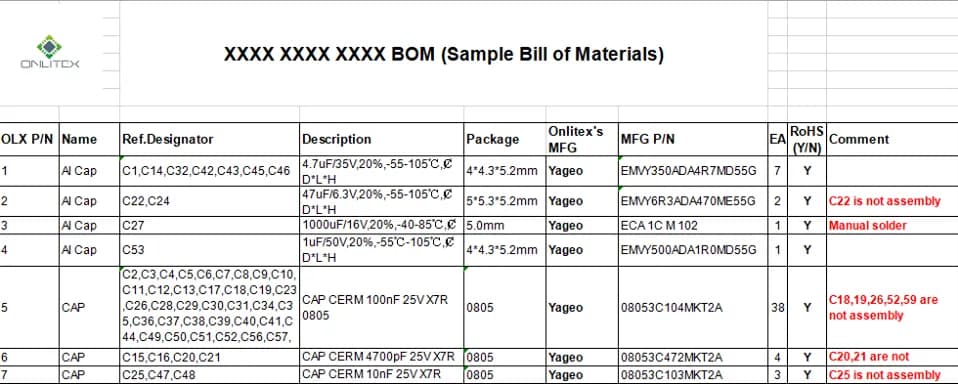
A responsive quote, typically 24 to 48 hours for an ordinary BOM, is a good sign of an organized engineering team. Just as important is what comes back: a good quote often includes questions about unclear BOM lines, DFM comments and lead-time warnings. Sending complete data helps; here is what files you need for a PCB assembly quote.
6. What is your typical lead time?
Ask for realistic lead times for your volume and how they change when parts are out of stock. Lead time is usually driven by the slowest component, not by assembly. Also plan around Chinese New Year, when factories and suppliers across China close for an extended period and capacity takes time to recover afterward.
7. Will you sign an NDA?
Your design is your IP. A trustworthy manufacturer will sign an NDA under your local law. Beyond the NDA:
- Share only what is needed to quote and build; full schematics are rarely required for assembly.
- Keep firmware source code in-house and supply programming files or pre-programmed parts.
- Register your trademarks in China early, since China uses a first-to-file system.
- Mark documents as confidential and keep a record of what you sent and when.
8. Do you offer box build?
If you need finished products, one supplier for PCBA, cable assembly and final assembly reduces hand-offs, shipping steps and the risk of finger-pointing when something goes wrong.
9. Who will be my point of contact?
Direct access to an engineer or project manager speeds up problem solving dramatically. Ask who handles engineering questions, how quickly they respond, which time-zone overlap they offer, and how changes (ECNs) are documented and confirmed. Written confirmation of every change, with the revision number, prevents most build errors.
10. Can I see references or visit the factory?
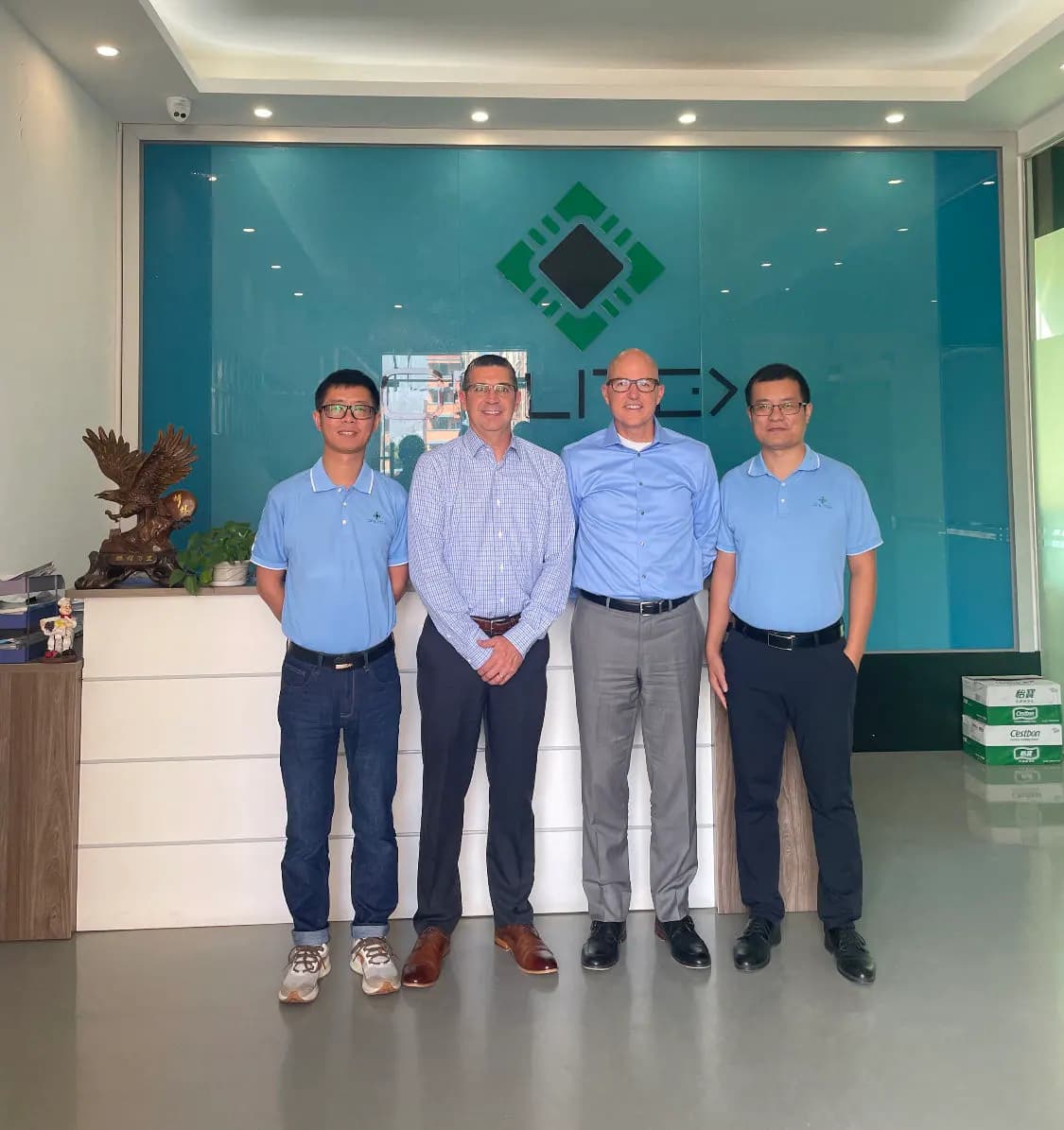
Testimonials, sample builds and factory visits (in person or virtual) build confidence before you scale. A supplier that is proud of its operation will be happy to show it.
Audit checklist for a PCB assembly manufacturer in China
Whether you visit in person, send a third-party auditor or take a live video tour, look for:
- Incoming inspection: how components are checked and how moisture-sensitive parts are stored and baked.
- ESD control: grounded workstations, wrist straps, ESD flooring and packaging.
- Process control: documented reflow profiles, stencil management, and feeder verification to prevent wrong-part placement.
- Inspection stations: AOI after reflow, X-ray for hidden joints, and clear handling of rejected boards.
- Traceability: lot and date codes linked to production orders.
- Nonconformance handling: a quarantine area and a corrective-action process (often an 8D report).
- Housekeeping: clean, organized lines with work instructions at each station.
- Calibration: current calibration records for measuring and test equipment.
Logistics and Incoterms basics
Incoterms define who pays for and who bears the risk of each part of shipping. The most common terms for electronics:
| Term | Seller's responsibility |
|---|---|
| EXW | Goods ready at the factory; buyer handles everything else |
| FCA | Seller clears export and hands goods to the buyer's carrier |
| FOB | Seller loads goods onto the vessel at the named port (sea freight) |
| DAP | Seller delivers to your named place; buyer pays import duties |
| DDP | Seller delivers and pays import duties and taxes |
Small, urgent shipments usually go by express courier; larger orders by air or sea freight. Agree packaging (ESD bags, moisture barrier bags where needed, cartons) and confirm the HS codes and import duties for your country with your customs broker.
Red flags to watch for
- A price far below other quotes with no explanation
- No questions about your BOM, files or testing
- Reluctance to share certificates, or certificates that don't match the company name or address
- Vague answers about component sources
- Refusal of any factory visit or video tour
- A trading company presenting itself as the factory
- Requests to pay a personal account, or an account in a different company's name
- Frequent changes of contact person with no handover
Start with a sample or pilot run
Don't move straight to volume. A staged approach limits risk:
- Prototype build: a small quantity to check DFM feedback, communication and basic workmanship.
- First article inspection: review the first boards against your drawings and BOM before the rest of the batch is built.
- Pilot run: a larger batch built on the production process, with test results and a defect summary.
- Golden sample: an approved reference unit both sides keep for future comparison.
- Ramp to volume: with agreed quality metrics, reporting and change control.
Conclusion
The right PCB assembly manufacturer in China is one that answers these questions clearly, backs the answers with evidence and performs well on a small build before you commit to volume. Spending a few weeks qualifying a supplier is far cheaper than fixing a bad production run.
Onlitex has manufactured electronics in Dongguan since 2005 — ISO 9001, UL, CSA and CCC certified, building to IPC-A-610 in a 6,000 m² factory with no MOQ and quotes in 24–48 hours for most BOMs. Ask us these questions — we're happy to answer.
FAQ
Is it safe to manufacture PCBs in China?
Yes, when you choose a certified supplier and protect your IP with an NDA. Ask for ISO 9001 and product certifications, and visit or audit the factory where possible.
How can I verify a supplier's ISO 9001 certificate?
Ask for a copy of the certificate, then check the company name, address, scope and expiry date. Confirm it with the certification body that issued it, which can usually be done through the registrar's own records or online database.
Which Incoterm should I use for PCBA orders from China?
It depends on how much of the shipping you want to control. EXW and FCA leave most of the logistics to you or your forwarder, while DAP and DDP put more responsibility on the seller. Agree the term in writing, along with the named place, before the first shipment.
- #PCB assembly China
- #EMS supplier
- #supplier selection