Turnkey, consigned or partial turnkey PCB assembly? Compare cost, lead time, risk and control, and see which sourcing model fits your project best.
 Onlitex Engineering Team5 min read
Turnkey PCB assembly means your manufacturer buys every part, builds the boards and tests them, so you deal with one supplier and one invoice. Consigned assembly means you buy and ship the components yourself and pay only for assembly. A partial turnkey (hybrid) model splits the work: you supply a few key parts and the manufacturer sources the rest.
There is no single cheapest model. The right choice depends on your volume, how much purchasing capacity you have in-house, and how much risk you can accept on delivery dates. This guide compares the three models side by side and shows when each one saves money.
The Three Sourcing Models at a Glance
The difference is simply who buys the parts and who carries the risk.
| Full turnkey | Partial turnkey (hybrid) | Consigned | |
|---|---|---|---|
| Who buys the PCB and components | Manufacturer | Shared | You |
| Number of suppliers you manage | One | A few | Many |
| Purchasing and kitting work for you | Very little | Some | All of it |
| Who carries shortage and wrong-part risk | Manufacturer | Shared | You |
| Control over specific part sources | Approved manufacturer list in the BOM | High for the parts you supply | Full |
| Typical fit | Most prototypes, small and medium runs | Projects with a few critical or customer-held parts | Large programs with a strong in-house purchasing team |
How Turnkey PCB Assembly Works
The manufacturer runs the whole supply chain for your build.
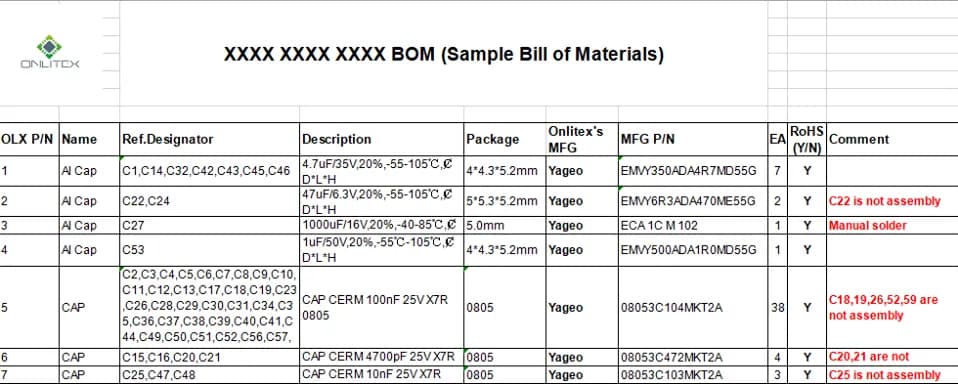
- You send Gerber files, a BOM, placement data and any test requirements.
- Engineers review the files and the BOM, flag issues and suggest alternatives for hard-to-find parts.
- The manufacturer quotes the full job: PCB, components, assembly and testing.
- After approval, it orders the bare boards and components, checks them on arrival and builds your boards.
- Boards are inspected and tested, then shipped to you.
Why buyers choose it:
- One point of responsibility. If a part is late or wrong, it is the manufacturer's job to fix it.
- Less admin. No purchase orders to dozens of distributors, no kitting, no tracking of partial shipments.
- Faster start. Purchasing runs in parallel with engineering review instead of waiting for your parts to arrive.
- Fewer handling errors. Parts go straight from the distributor to the factory, in the packaging the assembly machines expect.
What to watch: turnkey pricing includes the manufacturer's purchasing and handling. Ask for a quote that shows the component cost separately from assembly, so you can compare it with your own buying prices.
How Consigned PCB Assembly Works
You act as the purchasing department and the manufacturer only assembles.
- You buy every component, and usually the bare PCBs too.
- You pack the parts into a kit, labelled by part number, and ship it to the factory.
- The factory counts and checks the kit, reports any shortages, and schedules the build once everything is complete.
- Boards are assembled, inspected, tested and shipped back.
Why buyers choose it:
- Lower quoted price. You pay only for labour, machine time and testing.
- Full control of sources. Useful when parts must come from specific, audited channels.
- Use of existing stock. If you already hold inventory, consigning it avoids buying the same parts twice.
What it really costs:
- Your team's time. Every PO, follow-up and incoming check is work someone has to do.
- Attrition. SMT machines lose a small number of parts during setup and placement, especially tiny passives. Consigned kits need extra quantity, or the build stops short.
- Shipping and customs. Parts travel twice: from distributors to you, then from you to the factory.
- Delay risk. One missing or wrong part can hold the whole build until a replacement arrives.
Partial Turnkey: The Common Middle Ground
Partial turnkey combines the strengths of both models, and many projects end up here.
Typical reasons to supply some parts yourself:
- Expensive key components, such as processors, FPGAs or RF modules that you already hold or buy under your own contract.
- Customer-specified parts that must come from one approved source.
- Long-lead parts you have already secured.
The manufacturer then sources the standard parts (resistors, capacitors, connectors and the bare PCB), which are cheap to buy but time-consuming to manage. Make the split clear in the BOM: mark every line as "manufacturer supplied" or "customer supplied" so nothing is missed or ordered twice.
Cost Comparison: What to Include
The model with the lowest quote is not always the cheapest in total.
When you compare offers, add up the full cost of each model:
| Cost item | Turnkey | Consigned |
|---|---|---|
| Component price | In the quote | Your purchase price |
| Purchasing and admin time | Manufacturer | Your team |
| Extra parts for attrition | Manufacturer | You must add them |
| Inbound shipping and customs | Usually one shipment | Two legs: to you, then to the factory |
| Cost of a stopped build | Manufacturer's problem | Your delay |
| Excess stock after the build | Discuss with the manufacturer | Yours to store or sell |
A useful rule: the smaller your volume and the more component types on the BOM, the stronger the case for turnkey. Large, stable, repeat programs with a professional purchasing team are where consignment most often pays off.
How to Choose the Right Model
Answer these five questions honestly.
- Do you have purchasing staff who can buy, chase and inspect parts on time? If not, choose turnkey.
- How many component types are on your BOM? Dozens of different parts make consignment much harder to manage.
- Do any parts have to come from one approved source? Supply those yourself and use partial turnkey.
- How important is the delivery date? If a late build costs you a product launch, put the parts risk with the manufacturer.
- Do you already hold stock? Consign or part-consign it, and let the manufacturer buy everything else.
If you are still unsure, ask your manufacturer to quote both turnkey and partial turnkey for the same build. Comparing the two quotes line by line usually makes the answer obvious.
Turnkey, Consigned and Hybrid Assembly at Onlitex
Onlitex supports all three models from our factory in Dongguan, China, with no minimum order quantity.
- Full turnkey: we source the PCB and components through our supplier network, build and test the boards, and ship worldwide. See our component sourcing and supply chain service.
- Consigned and partial turnkey: send your parts and we will check them on arrival, report any shortages and build to your schedule.
- Assembly options: SMT, through-hole and mixed technology on rigid, flex and rigid-flex boards. See our PCB assembly service.
To get an accurate quote for any model, send the files in our PCB assembly quote checklist. If you are comparing suppliers, our guide on how to choose a PCB assembly manufacturer in China lists the questions to ask.
Get a Quote for Your Project
Quotes usually take 24–48 hours after engineering review, or 2–3 working days for BOMs with more than 100 component types. Tell us which parts, if any, you want to supply yourself, and we will quote turnkey and partial turnkey side by side.
FAQ
What is turnkey PCB assembly?
In turnkey PCB assembly the manufacturer sources every part: the bare PCB, all components and any stencils, then assembles and tests the boards. You send design files and receive finished, tested PCBAs from a single supplier.
Is consigned PCB assembly cheaper?
Not always. You avoid the manufacturer's purchasing margin, but you take on the cost of buying, kitting, shipping and managing parts yourself, plus the risk of delays if a part is missing or wrong. For most small and medium runs, the total cost is often similar or lower with turnkey.
Can I supply some components and let the manufacturer buy the rest?
Yes. This is partial turnkey, or a hybrid model. It is common when you hold stock of expensive or hard-to-find parts, such as processors or RF modules, and want the manufacturer to source the standard passives and connectors.
Does Onlitex offer turnkey and consigned assembly?
Yes. Onlitex supports full turnkey, consignment and hybrid models, with no minimum order quantity. Send your Gerber files and BOM and we will quote within 24–48 hours.
- #turnkey PCB assembly
- #consigned PCB assembly
- #component sourcing
- #PCBA