From DFM and BOM choices to panelization and test strategy: eight practical ways to reduce PCB assembly cost without putting reliability at risk.
 Onlitex Engineering Team6 min read
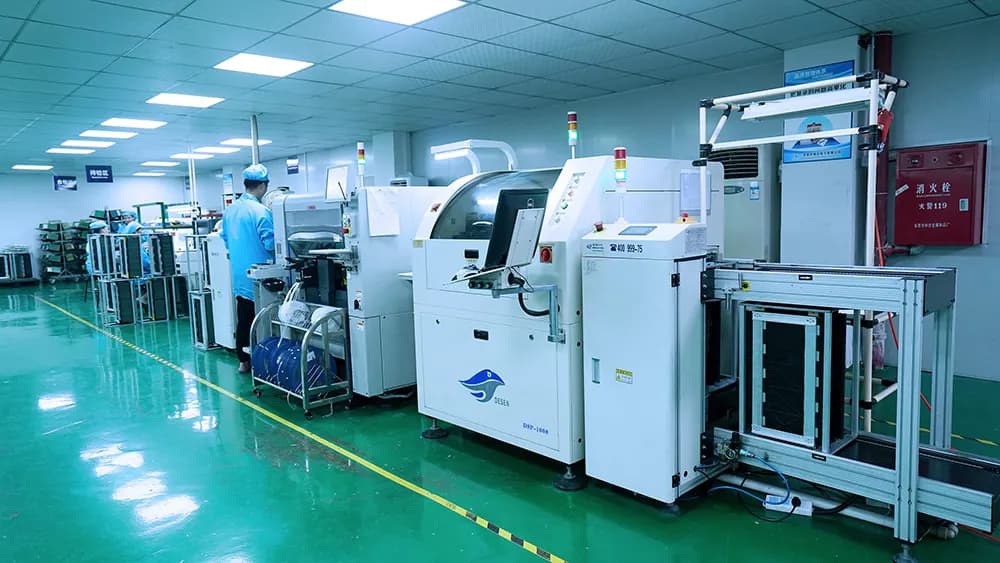
The most effective way to reduce PCB assembly cost is to fix cost at the design stage: fewer unique parts, simpler processes and a board that suits the factory's machines. After that, smart ordering and a test plan matched to the product's real risk keep costs down without hurting reliability.
Below are eight practical steps, roughly in the order they appear in a product's life. None of them require cheaper parts or skipped inspection, which tend to cost more later in failures and returns.
1. Get a DFM Review Before You Order
Design problems are cheapest to fix before the first board is built.
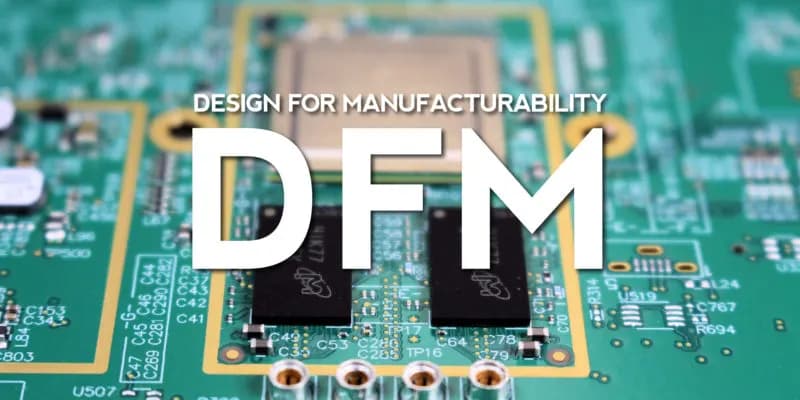
A design for manufacturing (DFM) review checks your files against the factory's process capabilities. It catches issues such as:
- Pads or spacing that cause solder bridges or tombstoning
- Components placed too close to the board edge or to each other for the machines
- Missing fiducials, tooling holes or clear panel edges
- Footprints that don't match the parts on the BOM
Each of these can lead to rework, lower yield or a respin, all of which cost far more than the review. At Onlitex, our engineers run a DFM review on every design before production. Learn more about our PCB design and DFM services, or read our introduction to manufacturability analysis.
2. Reduce the Number of Unique Components
Every different part number adds cost, even when the part itself is cheap.
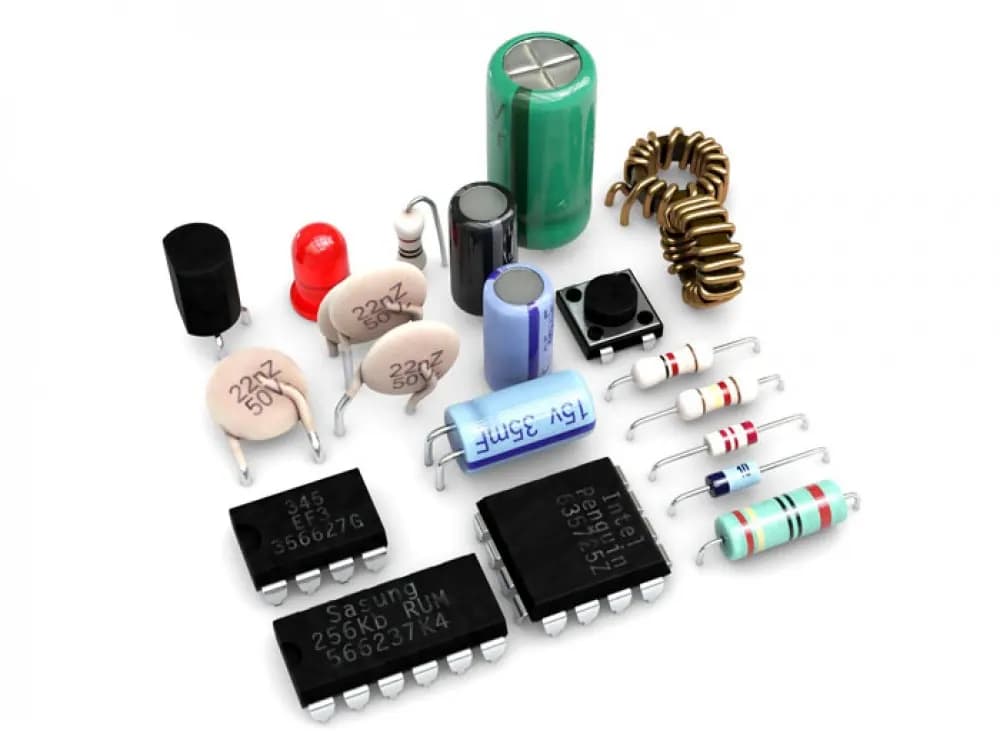
Unique parts add purchasing work, feeder setups on the SMT line and the risk that one part is out of stock. To simplify:
- Standardise values. Use the same resistor and capacitor values wherever the circuit allows.
- Standardise package sizes. Common sizes such as 0402 and 0603 are cheaper and easier to source than very small packages.
- Reuse parts across products if you build a family of boards.
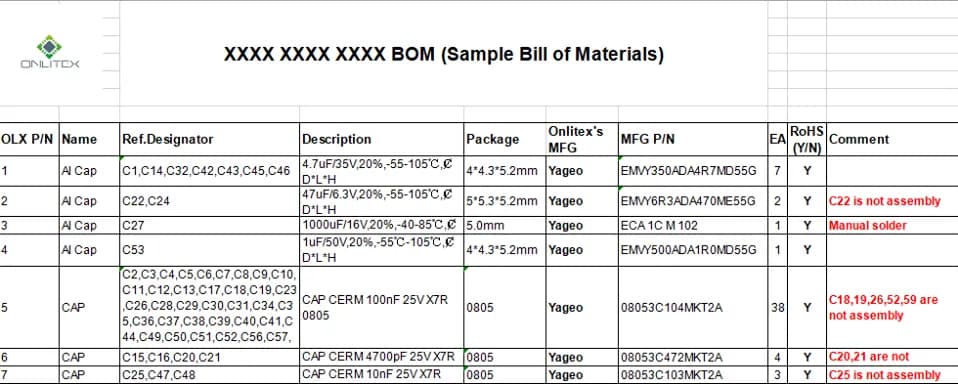
A shorter BOM is easier to quote, buy and build. Our article on BOM management explains how to keep it clean.
3. Approve Alternative Parts
Locking every line of the BOM to one manufacturer part number removes your negotiating room.
For non-critical parts such as passives, connectors and standard logic, list approved alternatives or mark the line "or equivalent". This lets your manufacturer:
- Buy from stock instead of waiting for a single source
- Choose a better-priced equivalent
- Avoid delays when one part goes on allocation
Keep critical parts locked. Processors, RF modules and safety-related components should stay exactly as specified.
4. Simplify the Assembly Process
Each extra process step adds setup time and handling.
- Place components on one side where possible. A second SMT side means a second pass through printing, placement and reflow.
- Limit through-hole parts. Mixed technology (SMT plus through-hole) needs extra soldering steps. Where an SMT version of a part exists and suits the design, it is usually cheaper to assemble. See our comparison of SMT vs through-hole assembly.
- Group through-hole parts together if you need them, so they can be soldered efficiently.
5. Panelize Your Boards Efficiently
How boards are arranged on a production panel affects both PCB and assembly cost.
Assembly machines handle panels, not single small boards. A good panel:
- Fits as many boards as possible on the standard panel size, with little wasted material
- Has clear edges and fiducials for the machines
- Uses a depaneling method (V-score or tab routing) that suits the board shape and nearby components
If you have no special requirements, send single-board files and ask the manufacturer to propose the panel layout. They know which layout runs best on their lines.
6. Specify the Board, Not More Than the Board
Over-specifying the bare PCB is one of the most common hidden costs.
Check each requirement against what the product really needs:
| Specification | Ask yourself |
|---|---|
| Layer count | Could the layout be routed with fewer layers? |
| Surface finish | Do you need ENIG, or would HASL or OSP do? See HASL vs OSP. |
| Tolerances | Are tight tolerances needed on every dimension, or only on a few features? |
| Copper weight and thickness | Are heavier copper or a non-standard thickness really required? |
| Special processes | Do you need via filling, controlled impedance or blind vias on this board? |
Every "yes" is fine when the design needs it. The savings come from removing the ones that don't.
7. Plan Order Quantities and Timing
Setup costs are spread across the number of boards you build.
- Ask for quotes at two or three quantities. This shows where the price breaks are.
- Combine builds where you can, instead of many very small orders of the same board.
- Plan ahead for long-lead parts. Rush buying from brokers is expensive. Sharing a forecast with your manufacturer helps it buy at better prices and times.
At Onlitex there is no minimum order quantity, so you can start with a small batch and scale up. Small to medium orders usually take about two weeks when all components are in stock.
8. Match Testing to the Product's Risk
Testing costs money, but escaped defects cost much more.
Choose the right mix instead of testing everything in every way:
- Automated optical inspection (AOI) checks placement and solder joints quickly on every board.
- X-ray inspection is essential for BGA and other hidden joints.
- In-circuit testing (ICT) suits high volumes, where the fixture cost is spread over many boards.
- Functional testing (FCT) proves the board works as intended. A simple, well-designed test often catches most real-world faults.
Agree the test strategy with your manufacturer early, so test points and fixture needs are designed into the board. See our inspection and testing services.
What Not to Cut
Some savings come back as bigger costs later.
- Unverified or grey-market components. The risk of counterfeit or damaged parts far outweighs the saving.
- Inspection on fine-pitch and BGA parts. Hidden defects show up in the field, not on the line.
- Moisture and ESD handling. Poor storage causes defects that are hard to trace.
- Documentation. Incomplete files lead to questions, delays and errors.
Quick Checklist Before You Request a Quote
Run through these points before you send your files.
- DFM: has the layout been checked against the manufacturer's process rules?
- BOM size: have you merged duplicate values and package sizes wherever the circuit allows?
- Alternatives: are approved alternatives listed for every non-critical part?
- Process: are SMT parts on one side, and through-hole parts kept to a minimum?
- Panel: have you either specified a panel or asked the manufacturer to propose one?
- Board spec: does every layer, finish, tolerance and special process have a clear reason?
- Quantities: have you asked for prices at two or three quantities, and shared a forecast?
- Testing: is the test plan agreed, with test points designed into the board?
If you can tick all eight, your quote will be faster, more accurate and usually lower. If some are open, tell your manufacturer: a good partner will help you close them before production.
Get a Cost-Optimised Quote
Send your Gerber files, BOM and target quantities, and ask for a DFM review with your quote. Our engineers will point out the design and BOM changes that would lower your cost. Quotes usually take 24–48 hours after engineering review.
Not sure whether to supply parts yourself? Read turnkey vs consigned PCB assembly, or see our PCB assembly service.
FAQ
What drives PCB assembly cost the most?
For most boards the components are the largest part of the cost, followed by the bare PCB and then assembly and testing. The number of unique parts, the assembly processes needed (SMT, through-hole or both) and the order quantity all have a big effect.
Is it cheaper to assemble PCBs in China?
Often yes, especially when the manufacturer also sources components and builds the bare boards through its local supply chain. Compare total landed cost, including shipping, duties and the cost of quality problems, not just the unit price.
Does reducing PCB assembly cost mean lower quality?
Not if you cut waste rather than controls. Design changes, BOM consolidation and better panelization lower cost without touching quality. Removing inspection or using unverified parts usually costs more later in failures and rework.
How can I get a cheaper PCB assembly quote?
Send complete files, ask for a DFM review, approve alternative parts where possible, and ask the manufacturer to quote two or three quantities. This shows where the price breaks are and which design choices drive the cost.
- #PCB assembly cost
- #DFM
- #BOM
- #PCBA