What reflow soldering is, the four stages of the reflow profile (preheat, soak, reflow and cooling) and how reflow is used for SMT and pin-in-paste assembly.
 Onlitex Engineering Team2 min read
What is reflow soldering?
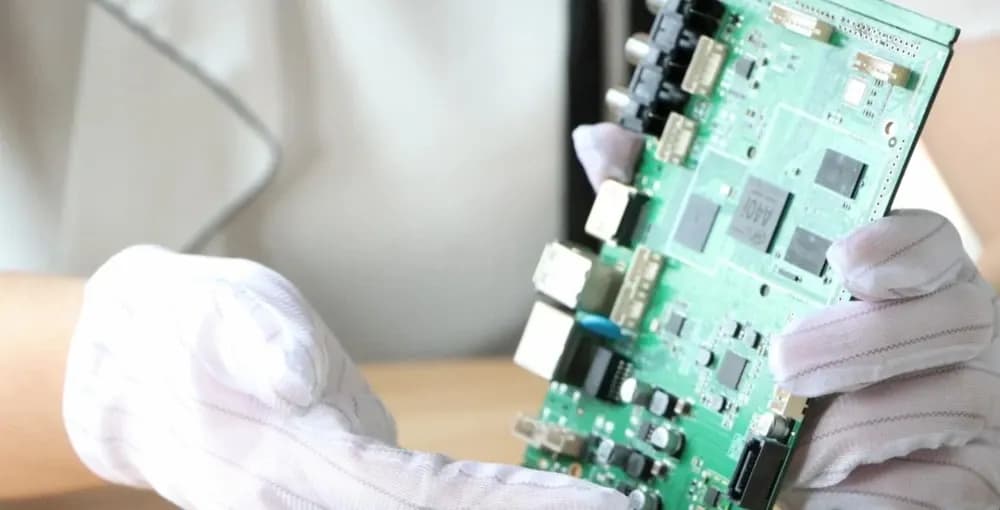
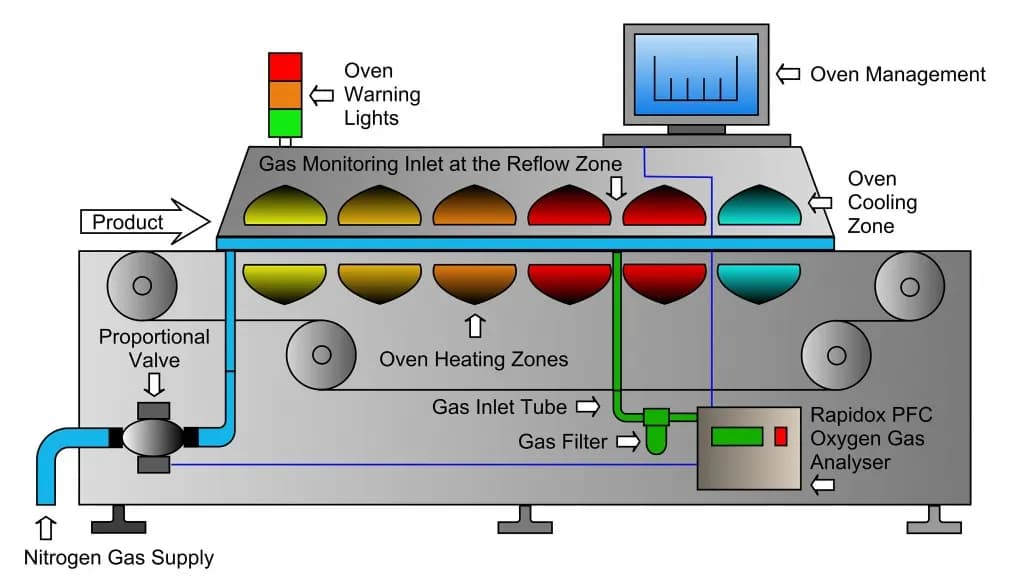
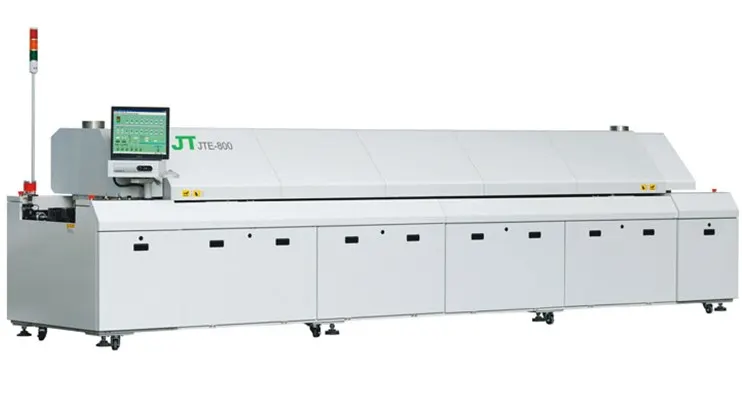
Reflow soldering permanently joins components to their pads on a circuit board. The components are first held temporarily in place by solder paste, which is then melted by hot air or other forms of thermal radiation and conduction. Reflow soldering is carried out in a reflow soldering machine, called a reflow oven.
The reflow soldering process
As the definition suggests, components are temporarily attached to their contact pads with solder paste before the actual soldering. This preparation has two main steps. First, solder paste is accurately applied to each pad through a solder paste stencil. Then, components are placed on the pads by a pick-and-place machine. Reflow soldering only starts once these preparations are complete.
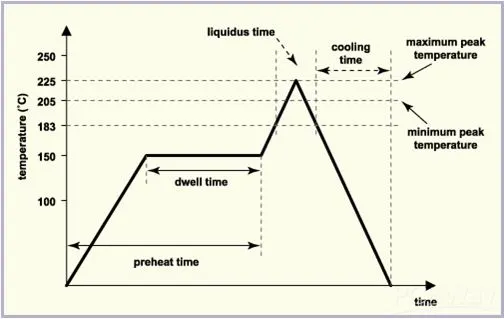
Step 1: Preheating
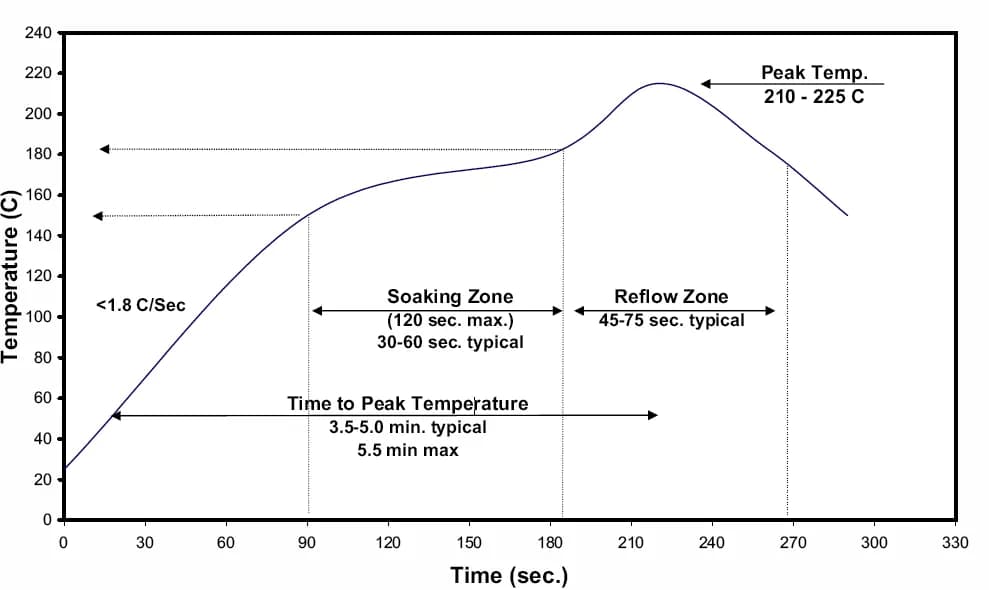
Comparing a reflow oven with a toaster or baking oven makes the importance of preheating easy to understand: to bake bread well, the oven must be preheated first. Preheating has two purposes in reflow soldering. First, it brings the boards being assembled consistently up to the required temperature, in line with the thermal profile. Second, it drives off the volatile solvents contained in the solder paste; otherwise, soldering quality may be compromised.
Step 2: Thermal soak
Like wave soldering, reflow soldering depends on flux, which is contained in the solder paste. The temperature must therefore rise high enough to activate the flux; otherwise, the flux cannot play its active role in the soldering process.
Step 3: Reflow
This phase reaches the peak temperature of the whole process, which melts and reflows the solder paste. Temperature control plays a crucial role: too low a temperature stops the solder paste from reflowing fully, while too high a temperature may damage SMT components or boards.
For example, a BGA (ball grid array) package contains many solder balls that melt during reflow soldering. If the soldering temperature does not reach the optimum level, the balls may melt unevenly, and the BGA may need rework or even be scrapped.
Step 4: Cooling
As the temperature profile shows, the temperature falls soon after the peak is reached. Cooling solidifies the solder, permanently fixing the parts to the contact pads on the board.
Applications of reflow soldering
Reflow soldering can be used for both SMT and THT assembly, but it is mainly used for SMT. When reflow soldering is used for THT assembly, the pin-in-paste (PIP) method is usually used. First, the holes in the board are filled with solder paste. Then, the component pins are inserted into the holes, with some solder paste coming out on the other side of the board. Finally, the board is reflow soldered.
For through-hole parts, see also wave soldering and our comparison of SMT vs through-hole assembly.
- #reflow soldering
- #SMT assembly
- #reflow profile